
How to Stay Safe and Productive While Operating Forklifts
Key Takeaways
- Proper training and certification are essential for safe forklift operation.
- Regular equipment inspections help identify and mitigate potential hazards.
- Maintaining situational awareness and adhering to load capacities prevent accidents.
- Utilizing personal protective equipment (PPE) enhances operator safety.
- Implementing technology and automation can further improve safety and productivity.
Table of Contents
- Training and Certification
- Pre-Operation Inspections
- Load Management
- Situational Awareness
- Personal Protective Equipment (PPE)
- Safe Operating Practices
- Leveraging Technology and Automation
- Continuous Improvement and Training
- Conclusion
Operating a forklift involves significant responsibility, precision, and focus. Whether you are new to the field or a seasoned operator, maintaining high standards of safety and productivity is essential. Comprehensive training and awareness of best practices underpin successful and secure forklift operations. Many operators seek forklift classes CA to ensure they have the right skills and credentials to perform their jobs safely and efficiently.
Improper use of forklifts can result in serious accidents, property damage, and downtime. By taking proactive measures and integrating current safety standards, both individual operators and facility managers can reduce risks and improve workflow. Prioritizing safety not only protects personnel but also boosts productivity and morale throughout the workplace. Staying up to date with industry standards ensures compliance and efficiency are maintained at all times.
Training and Certification
Proper training and certification are foundational to forklift safety. The Occupational Safety and Health Administration (OSHA) mandates that all operators must be trained and certified before operating a forklift. Comprehensive programs include both theoretical instruction—covering rules, equipment types, and hazard recognition—and hands-on training with the actual machinery. Employers are responsible for verifying each operator’s competence before allowing them to work independently. Those seeking certification should ensure their programs comply with OSHA workplace safety requirements.
Pre-Operation Inspections
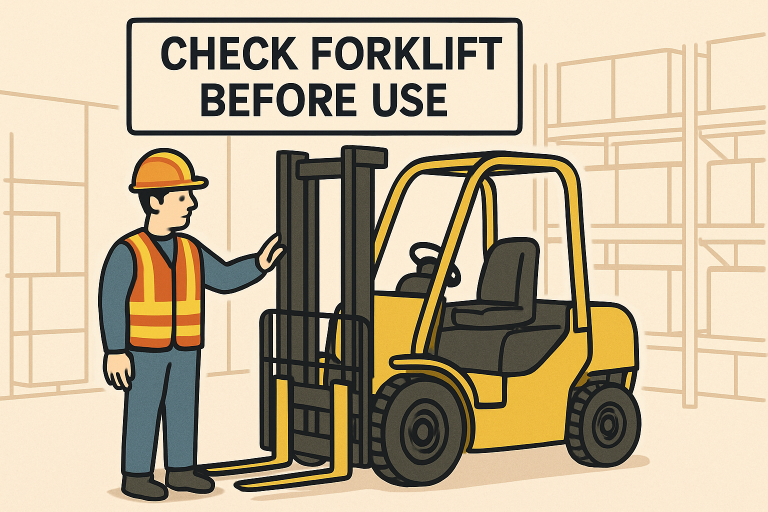
Daily pre-operation inspections are necessary to identify any faults or hazards before using a forklift. Operators should methodically check the machine for hydraulic leaks, tire condition, steering functionality, brakes, and warning devices such as horns and lights. If any defects are found, the forklift should not be used until all issues have been addressed. Regular inspections not only increase operator safety but also prevent unexpected breakdowns and prolong equipment life, a best practice supported by the National Safety Council.
Load Management
Understanding how to manage loads is critical for both safety and productivity. Forklifts are designed to carry specific weight limits, and exceeding these limits can lead to dangerous incidents, including tip-overs. The load should be centered and secured to the forks, and the mast should remain slightly tilted backward to stabilize the load while moving. Operators must always read load charts and follow the manufacturer’s recommendations to avoid overloading, which safeguards both operators and material resources.
Situational Awareness
Operators must maintain situational awareness at all times to preempt potential accidents. This means being vigilant for pedestrians, obstacles, and other vehicles. Using mirrors, warning lights, and alarms increases visibility and helps communicate presence in busy environments. Adhering strictly to speed limits, especially in congested areas, and signaling when turning or backing up further reduces the risk of accidents. A workplace culture that emphasizes awareness fosters a safer and more efficient environment for everyone.
Personal Protective Equipment (PPE)
Personal protective equipment is a crucial part of forklift safety. Operators should wear hard hats, high-visibility vests, steel-toed boots, and, when required, hearing protection. These items not only protect against specific injuries but also make operators more visible to others, decreasing the likelihood of accidents. Complying with company PPE policies and encouraging colleagues to do the same creates a safer workspace and highlights a proactive approach to risk mitigation.
Safe Operating Practices
Best operating practices should be followed at all times. Operators should always fasten seatbelts, keep loads low to the ground during transport, and avoid sudden movements such as rapid turns or abrupt stops. Passengers should never be allowed on forklifts. Verifying that loads are balanced and secure before driving is another preventive measure. These habits help maintain the stability and maneuverability of the forklift, reducing the risk of tipping or losing loads.
Leveraging Technology and Automation
Modern forklift operations often benefit from technology and automation. Forklift simulators offer new and experienced operators opportunities to practice in virtual settings without risk. Safety sensors and proximity alarms enhance awareness and help reduce accidents. Some warehouses are adopting semi-automated or automated forklifts, which help maintain high productivity and uniform safety standards. Investing in these solutions further minimizes human error and drives operational efficiency.
Continuous Improvement and Training
Ongoing education is key to safe and productive forklift operations. Regularly scheduled refresher training and diverse learning opportunities ensure operators keep pace with new regulations and processes. Employees should be encouraged to share insights and report hazards without fear of reprisal. Promoting a culture of continuous improvement not only boosts safety but also strengthens teamwork and operational excellence.
By following these proven strategies, forklift operators and facility managers can help prevent injuries, maintain regulatory compliance, and maximize workplace efficiency.
Conclusion
In conclusion, maintaining forklift safety requires a combination of proper training, consistent inspections, responsible operating practices, and a strong commitment to workplace awareness. When operators follow established guidelines and employers provide the necessary tools, education, and technology, the risk of accidents can be significantly reduced. Emphasizing continuous improvement and safety culture ensures that teams remain vigilant and prepared for evolving workplace demands. Ultimately, prioritizing these practices not only protects employees but also supports smoother, more efficient operations across the entire facility.